

How Music, Stories, and Jokes Keep Languages Breathing
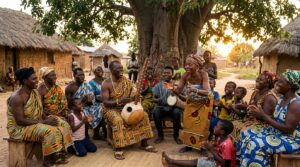 When we think about saving a language, we often picture experts writing thick dictionaries or students sitting in quiet classrooms. Although these things are important, they aren’t what keeps a language alive. A language survives when it is used to express joy, laughter, and emotion.
The real-life support for any language, whether it is spoken Igbo or an indigenous sign language, is found in music, stories, and jokes. These are the things that make us want to speak and listen. They are the reasons a language breathes.
- Music: The Rhythm of Memory
Have you ever noticed how easy it is to remember the lyrics to a song, even if you haven’t heard it in years? Music has a magical way of sticking to our brains.
- Rhythm and Rhyme: When a language is set to music, the sounds become easier to learn. For children, singing a song in their native tongue helps them master difficult pronunciations without even trying.
- Emotional Connection: A song can make us feel proud, sad, or happy. When we connect a language to our feelings, we are much more likely to keep using it.
- Global Exposure: Today, Afrobeats and highlife music are traveling all over the world. When an artist uses an Igbo phrase in a hit song, thousands of people across the globe repeat it. This makes the language visible and modern.
- Stories: The Map of Our History
Our elders say, “Ihe nne nụrụ, ka ọ na-akọrọ nwa ya” (What the mother heard is what she tells her child). Stories are the bridges that carry our history from the past into the future.
- Passing Down Wisdom: Many indigenous stories contain lessons about nature, medicine, and how to treat others. These “oral libraries” only stay open if we keep telling the stories in the original language.
- Building Imagination: When a grandfather tells a story about the tortoise (Mbe) in Igbo, he isn’t just sharing a tale; he is teaching the child how the Igbo world thinks.
- Sign Language Storytelling: For the Deaf community, storytelling is an art form. Through Visual Vernacular, Deaf storytellers use their hands, bodies, and faces to create movies in the air. These stories keep indigenous sign languages rich and descriptive.
- Jokes: The Language of Connection
You can learn a language’s grammar from a book, but you only truly own a language when you can understand a joke in it. Humor is the ultimate sign of a healthy language.
- Cultural Nuance: Jokes often rely on wordplay or cultural secrets that don’t translate well into English. When we laugh at an Igbo joke, we are celebrating a shared understanding that belongs only to us.
- Relaxing the Learning Process: Learning a language can be stressful. But when we use jokes and humor, the fear of making a mistake disappears.
- Keeping it Young: Jokes and slang keep a language fresh. When young people create new “slang” in their native tongue on social media, it shows the language is still growing and changing to fit modern life.
WhyFun is a Serious Business
If we only use our native languages for serious events, like funerals or traditional meetings, the younger generation will start to see the language as something old or boring.
To keep a language breathing, we must use it in our everyday fun spaces:
- In the Kitchen: Tell a funny story while cooking.
- On the Playground: Teach children games and songs in their mother tongue.
- In the Digital Space: Platforms like Omenkaapp are essential because they bring these stories and cultural nuances to our phones.
Our Collective Responsibility
We must remember that “Okuko nti ike na-anụ ihe n’ite ofe” (A stubborn chicken hears the news inside the soup pot). We shouldn’t wait until our languages are in “the soup pot” (danger) before we start appreciating them.
Every time you share a traditional song, tell a bedtime story, or crack a joke in your native tongue, you are performing a rescue mission. You are making sure that our language doesn’t just sit in a dictionary, but stays alive in the hearts and mouths of our children.
Keep singing. Keep telling stories. Keep laughing. That is how we keep our heritage breathing.
